
- From Paragraph to Essay
“A whole is that which has a beginning, a middle, and an end.” –Aristotle, Poetics, written in about 350 B.C.E.
An essay is a series of paragraphs that discuss a single idea in some depth. It can be just a couple of paragraphs long, or it can be dozens of pages long, as in a research paper. Usually, however, an essay is much longer than a paragraph, though its structure has some similar points.
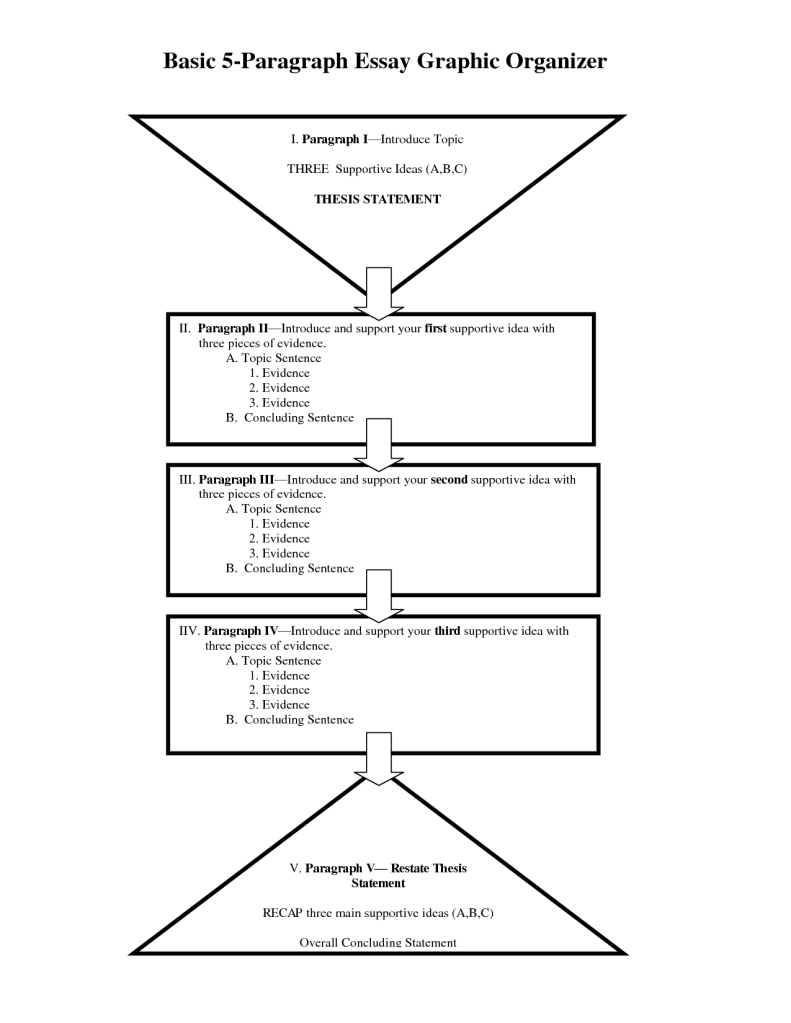
The paragraph structure that we have been studying is a good model for a “5-paragraph” or “hamburger” essay that you should master.
| Paragraph | “Hamburger” Essay |
| 1 Topic Sentence (the first sentence) | 1 Introduction Paragraph with “thesis statement” (as the last sentence of the paragraph.) |
| 2~3 Supporting Sentences | 2~3 Supporting Paragraphs, each with its own topic sentence |
| 1 Concluding Sentence | 1 Concluding Paragraph (restate the thesis, then give an opinion, prediction or suggestion.) |
The Benefits of Extensive Reading
Extensive reading should be a key part of your English study. Not only is it an easy and fun way to study, but it is also the only practical way to learn all the millions of collocations–common word pairings–that occur in English. In addition, research has shown that it is as or more effective than any other kind of language study for all language skills, not just reading. Finally, if you make it a habit, you’ll be able to maintain your English even if you have no time for formal study. If you’re not practicing extensive reading, you’re missing out on a great way to study English.
Here’s the same topic expanded into a 5-paragraph essay. There’s more detail, but it is basically the same argument structure on a larger scale and written in more formal academic English.
The Role of Extensive Reading in Long-Term English Language Acquisition
Learners of English as a foreign language must dedicate years to acquiring the foundational elements of the language. This process can often be frustrating and discouraging for many students. However, those who persist will eventually find they possess sufficient vocabulary and grammar to begin comprehending simple texts. Once this milestone is reached, the pace of language acquisition can significantly accelerate. Extensive Reading, which involves reading large quantities of simple texts, should be an integral part of every student’s English language study, regardless of their proficiency level.
Firstly, extensive reading is the most practical method for studying collocations. Collocations are high-frequency word pairings that sound natural within a language. For instance, one can play tennis, billiards, or the saxophone, but one does not play bowling, judo, or swimming. The sheer number of collocations makes them challenging to formally study. The only viable method for students to assimilate these natural word pairings is gradually, over time, through substantial language input. Extensive reading, particularly on topics of inherent interest, provides the most efficient and practical means of acquiring this input.
Surprisingly, extensive reading has been demonstrated to be one of the most effective methods for studying all facets of a language. It enhances reading skills since reading proficiency is primarily developed through practice. Numerous studies have consistently shown that extensive reading is more effective in preparing for exams like the TOEIC than taking dedicated TOEIC preparation classes. Extensive reading is highly recommended for individuals serious about improving their reading, writing, listening, and speaking skills.
Furthermore, extensive reading should serve as the foundation for a lifelong study of English as a foreign language. After completing formal education, individuals often find themselves occupied with work and family responsibilities, leaving little time for private lessons. Nonetheless, extensive reading is an activity that anyone can pursue in their spare time. It is crucial to have access to appropriate materials that are easy and enjoyable to read, transforming reading into a pleasurable activity to look forward to each day. Students who adopt extensive reading as a hobby will not only maintain the English skills they have acquired but also continue to develop them throughout their lives.
The benefits of extensive reading are clear. Although it may not appear to be serious study and should not feel burdensome, it is the most effective strategy for long-term language development. Every dedicated student of a foreign language should prioritize extensive reading. Those who incorporate extensive reading into their regular routine will reap substantial rewards over the years. Not only will they continue to refine their foreign language skills, but their intellectual lives will also flourish as they explore the world through a second language.
 インクス
インクス 